Simulations with ABAQUS – ABAQUS, a leading software suite for finite element analysis (FEA), is renowned for its robust capabilities in handling complex simulations. From nonlinear material behavior to sophisticated contact interactions, ABAQUS provides engineers with the tools needed to tackle the most challenging engineering problems. This comprehensive guide will explore the key features of […]
Author: bibhatsu
10 Tips and Tricks of ANSYS Simulations – Mastering ANSYS simulations can significantly enhance your engineering projects, making them more efficient, accurate, and insightful. Whether you’re a novice or an experienced user, there’s always room to optimize your simulation workflow. Here are ten tips and tricks to help you get the most out of ANSYS […]
ANSYS for Advanced Engineering
ANSYS for Advanced Engineering Analysis – When it comes to advanced engineering analysis, ANSYS stands out as the go-to software for professionals across various industries. Its robust features, versatility, and accuracy make it an indispensable tool for tackling complex engineering challenges. In this blog post, we’ll explore the key reasons why ANSYS is the preferred […]
Engineering simulations have revolutionized the way we design, analyze, and validate complex systems. ANSYS, a leading simulation software, offers an extensive suite of tools for engineering analysis. Whether you’re an experienced engineer or a beginner looking to dive into the world of simulations, mastering ANSYS can significantly enhance your capabilities. In this guide, we’ll walk […]
Here we have a list of different numerical modeling software that are generally popular in the domain of science and research. This list may miss some important tools that might be relevant in some particular domain, but overall, these are a good start if you are new in research simulation software you will get a […]
Introduction Python for Finite Element Method Simulations 🚀 – The Finite Element Method (FEM) is a powerful computational technique used to approximate solutions to complex engineering and physical problems. Leveraging Python for FEM simulations can significantly enhance the process, making it more accessible, efficient, and flexible. In this comprehensive guide, we’ll explore how Python can […]
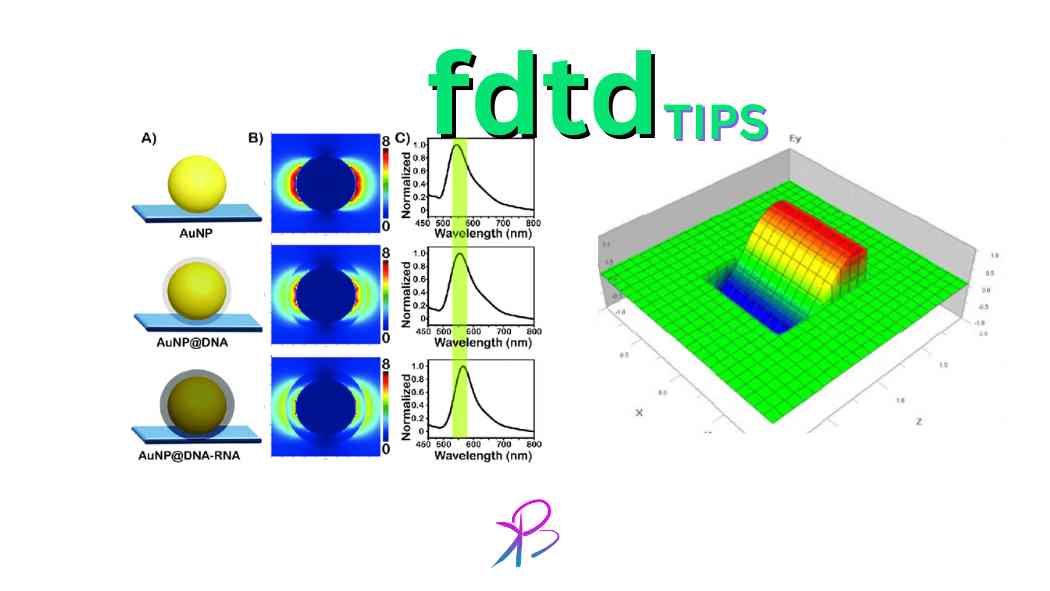
Tips for FDTD modelling
Introduction Tips for FDTD modelling – Finite-Difference Time-Domain (FDTD) simulation is a powerful computational method used to solve Maxwell’s equations for electromagnetic fields. It’s widely used in applications like antenna design, photonics, and wireless communication systems. Here are some crucial tips to ensure your FDTD simulations are accurate and efficient. 1. Define Your Objectives Clearly […]
Introduction Finite Element Analysis (FEA) is a powerful computational tool used to predict how objects behave under various physical conditions. Whether you’re designing a new product or testing the structural integrity of an existing one, FEA can save time and resources. Here are some essential tips to ensure your FEA simulations are accurate, efficient, and […]
1. Introduction Groundwater contamination is a critical environmental issue affecting millions of people worldwide. It refers to the presence of pollutants in groundwater that can harm ecosystems and human health. Groundwater contamination modelling is a scientific method used to simulate and predict the movement and concentration of contaminants in groundwater systems. 🌍🔬 Understanding and managing […]
The Conjugate Gradient (CG) method is a powerful algorithm used to solve large systems of linear equations, particularly those arising from the discretization of partial differential equations. This method is especially useful for sparse, symmetric, and positive-definite matrices. In this blog post, we’ll delve into the intricacies of the Conjugate Gradient method, exploring its principles, […]