Latest Posts

Challenges or Open Questions While COMSOL Multiphysics 6.3 brings substantial advancements, it does not fully eliminate persistent challenges inherent to high-fidelity multiphysics simulation. One significant hurdle remains the computational demands associated with large-scale or real-time simulations. Even with the inclusion of GPU acceleration, scenarios involving fully coupled nonlinear phenomena across disparate scales often require vast […]

If you’ve ever felt the drag of manual steps slowing down your simulation-prediction pipeline, you’re not alone. Engineers, researchers, and data scientists have long struggled to bridge the gap between physics-based modeling and data-driven analytics. But what if I told you there’s a way to automate this entire process — from simulation to AI prediction […]
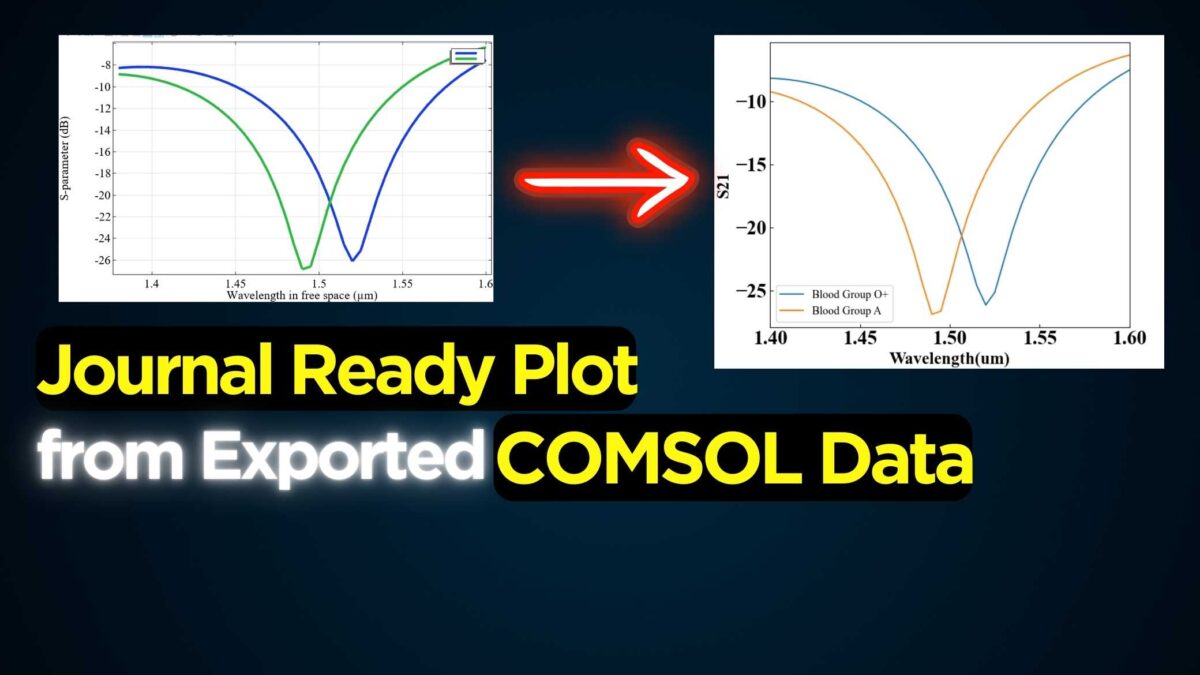
Even if different software tools provide necessary methods and technique to generate professional plots since they have to cater a larger audience, they prefer. to add a ton of feature that may be too much for someone who just wants to generate the academic research articles. So that is why I created the tool from […]

Simulating a Sphere Magnetic Field Earth’s magnetic field is often modeled as a dipole—a conceptually simple yet physically rich approximation. This field arises from complex dynamo processes in Earth’s core but behaves, on large scales, much like the field produced by a uniformly magnetized sphere.In research, this analogy allows us to simulate, visualize, and study […]
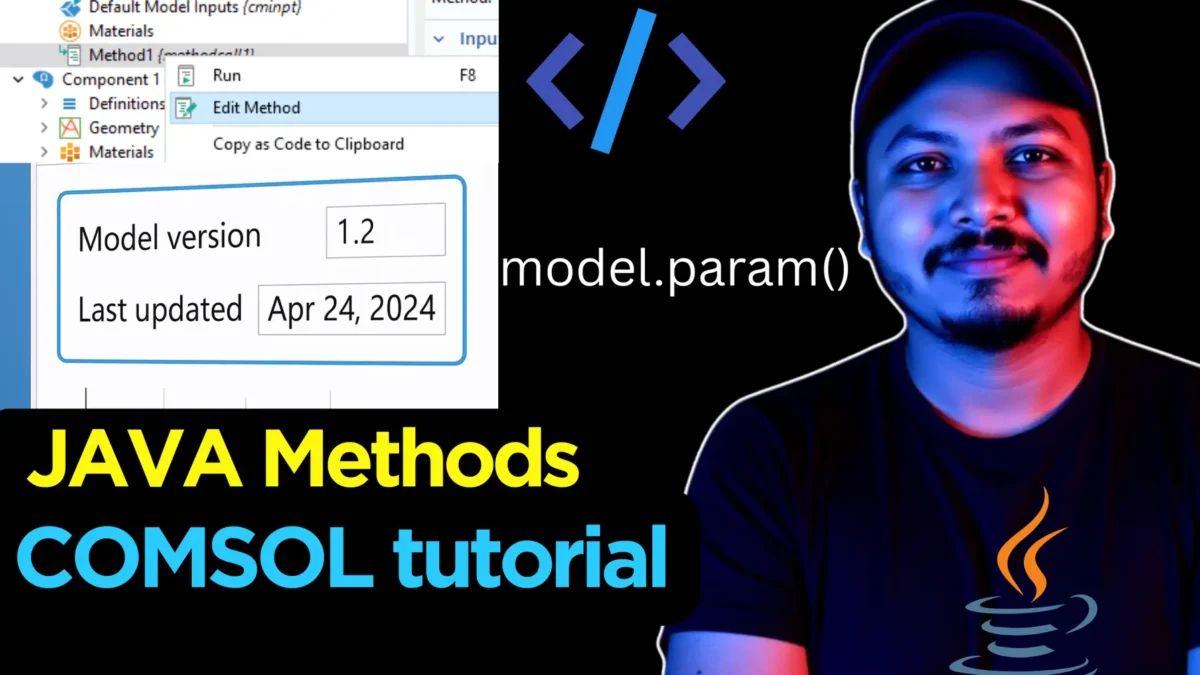
Auto-Increment Version and Date Comments in COMSOL Application Builder Have you ever wished COMSOL could automatically track version numbers or update timestamps when working in the Application Builder? If you’re building simulation apps or managing complex models, having a simple built-in versioning system can go a long way in documenting changes — even if it’s […]
Most scientific journals have clear expectations when it comes to figure styling, particularly for plots and graphs. They typically prefer clean, minimal designs with uniform font styles such as Arial, Times New Roman, etc and font sizes that remain clearly legible after reduction—usually no smaller than 8–10 pt. Axis labels and tick marks should be […]

